How to Build an AI-Assisted Development Workflow That Actually Works
Why one tool is never enough
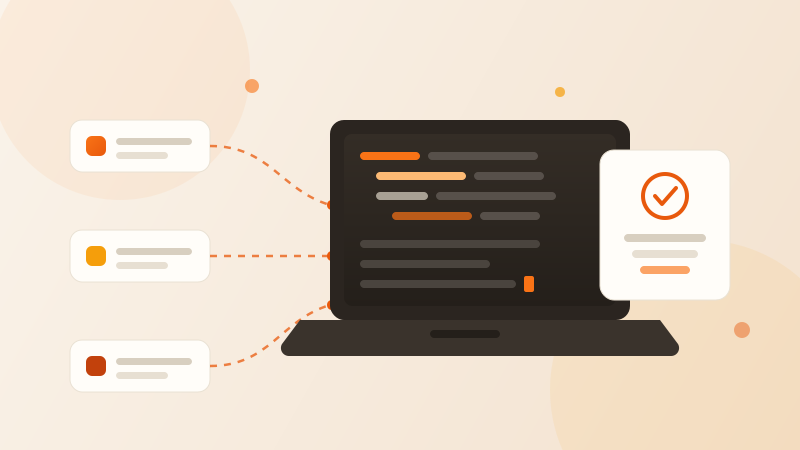
Most solo developers try a single AI coding assistant and expect it to handle everything. In practice each tool has a strength: some are excellent at planning, some at writing boilerplate, some at reviewing code. The winning move is to split responsibilities instead of forcing one tool to do it all.
A five stage workflow
- Plan - describe the feature, list files to touch, define acceptance criteria.
- Implement - generate the first working version with clear constraints.
- Refactor - ask for structure improvements without changing behaviour.
- Review - run a separate model as a hostile code reviewer.
- Ship - write the commit message, changelog and release notes.
Keep a human gate between review and merge. AI speed is only useful if correctness is still owned by a person.
Cost control
Set a monthly budget per tool, keep context small by working in focused files, and cache the conventions of your project in a single document every assistant can read.
Security boundaries
Never let an assistant touch secrets, production databases or payment code without an explicit human step. Treat generated code like a pull request from a fast but junior teammate.